Noah’s player reputation
The Kissing BoothNoah’s player reputation gives his bad-boy image a social life of its own: at school, he is treated as a proven flirt even when the evidence people can observe is uncertain. The story uses that gap to complicate how Elle understands him, linking his public standing not only to romantic rumor but also to fighting, protectiveness, and the difficulty of being taken seriously.
Public Image and Rumor
Noah’s reputation as a player persists despite the observation that he rarely appears to pay girls much attention. The contrast is part of the point: his status is widely circulated, and he seems almost proud of it, but the visible behavior described does not neatly confirm the stories. His reputation therefore operates less as a reliable account of his relationships than as a ready-made identity that other students attach to him.
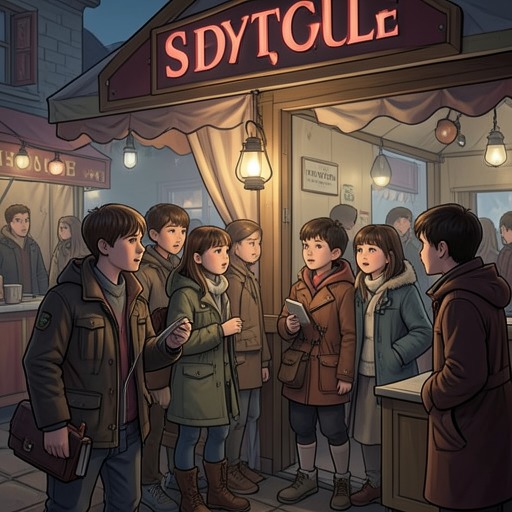
The image carries social appeal as well as suspicion. At the prospect of a school carnival, Noah’s participation in the kissing booth is imagined as a way to draw a crowd. That expectation rests on the idea that girls believe they might have a chance with him, even as his lack of attention to them complicates the fantasy. His notoriety can attract interest without demonstrating that he pursues it.
Elle’s Assumptions and Noah’s Account
When Noah objects to Elle going on a date with Cody Kennedy, Elle turns his player reputation against him. In anger, she portrays him as someone who has casual encounters and leaves, while acknowledging to herself that she does not know whether the accusation is true. Her outburst is therefore evidence of the reputation’s force, not proof that its most damaging version is accurate: she reaches for the story everyone knows precisely because it gives her a way to challenge his judgment of her choices.
Later, Noah offers a different account of what the rumors conceal. He says that girls he kisses at parties may claim afterward that their relationship went further, and that declarations of interest in dating him do not necessarily mean they want a serious relationship. In his view, his fighting reputation makes him seem suitable for a fling but unattractive as a long-term partner. Elle recalls that he and Lee Flynn had seldom questioned the claims, although she had sometimes seen Noah appear to spend a party alone. The competing accounts leave a distinction between Noah’s public legend, what others report, and what Elle has personally observed.
Protection and Conflict
The player image also sits beside Noah’s protectiveness toward Elle. He warns boys that they will have to answer to him if they hurt her, a gesture Elle initially reads as treating her like a vulnerable younger sister. She resents the effect: with no dating experience of her own, she sees his intervention as an unfair restriction on her ability to choose whom to date. His reputation may make his warning effective, but the protection it offers comes into conflict with her autonomy.
That conflict becomes explicit once they are romantically involved. Elle objects to Noah trying to dictate what she wears, whom she dates, and whom she speaks to; he says he is trying to prevent her from being hurt. His concern does not erase the controlling effect she identifies. The contrast complicates the familiar player persona: Noah may be publicly associated with casualness, yet in his relationship with Elle he is intensely protective, and that care can become a source of friction rather than simple reassurance.
Reassessment and Change
Noah’s fighting history helps explain why the player label is tied to a broader bad-boy identity. He says that repeated fights have taught him to take care of himself, while his own account of dating reflects an awareness that a reputation for violence can narrow how others imagine a relationship with him. The story thus connects his social image to more than romantic gossip: toughness and emotional reserve shape how he is perceived, and how he expects others to respond to him.
As Elle recognizes her feelings for him and their relationship develops, the public label becomes less adequate to describe their private exchange. Noah says that taking her to the dance was an attempt to apologize, but that she deserves more than an apology from him; despite disliking emotional conversations, he chooses to speak openly. When they discuss his departure for Harvard University, Elle encourages him to go rather than give up the opportunity, and they tell each other they love one another. Her later playful reference to his former player image sets that identity against the tenderness and candor he has just shown.
Narrative Significance
The reputation is neither simply confirmed nor wholly dismissed. It shapes how other students imagine Noah, supplies Elle with an accusation during a disagreement, and helps explain why he believes his fighting history makes serious commitment difficult. At the same time, the gap between rumor and observation prevents the label from serving as a complete account of his conduct. By placing it alongside his protectiveness, his conflicts with Elle, and his eventual emotional openness, the story presents the player image as a social role that persists even as the relationship reveals its limits.